
Designed to give displacement a door to close.
Estia Homes began as a question: how could emergency shelter help preserve social structure, provide dignity, and improve quality of life, while supporting a path back into community?
A pro-bono response to a global emergency.
In response to the housing crisis caused by Russia's 2022 invasion of Ukraine, CAL Collaborative launched a pro-bono research initiative examining emergency shelter models and deployment strategies.
The study revealed a growing gap in the market: a lack of effective, temporary shelter solutions at a time when global displacement is projected to rise exponentially. Standard-issue tents were designed for warm, dry, short-term use, yet families live in them for years, across every climate.
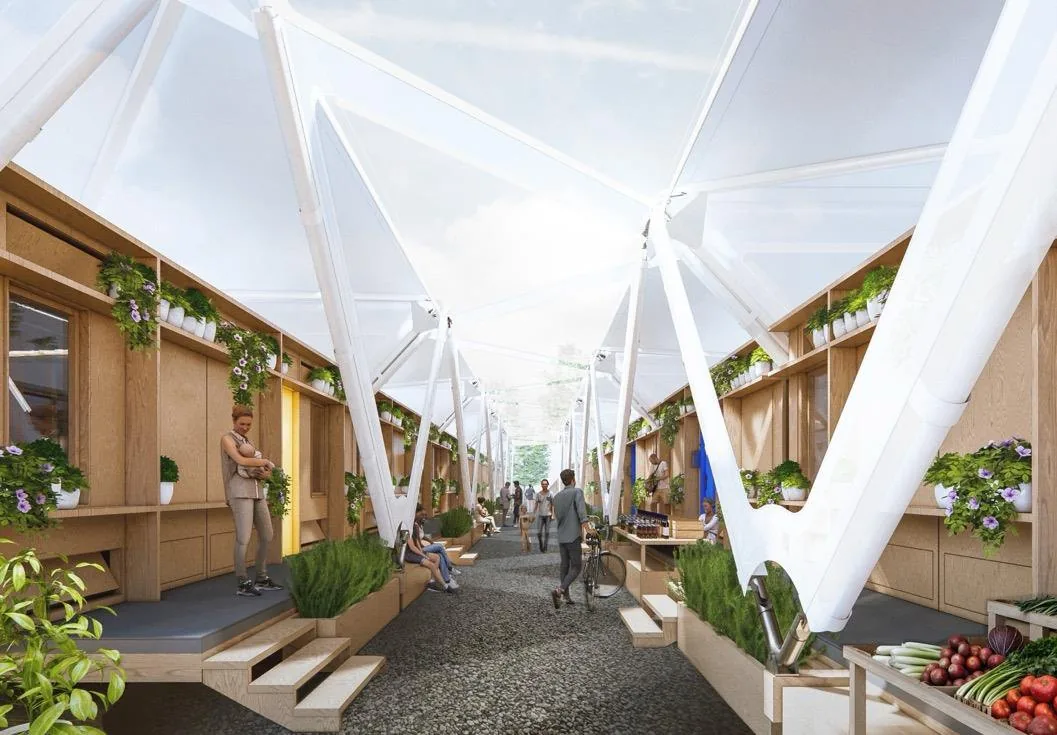
The research question became human: how could shelter help people rebuild, not just survive?
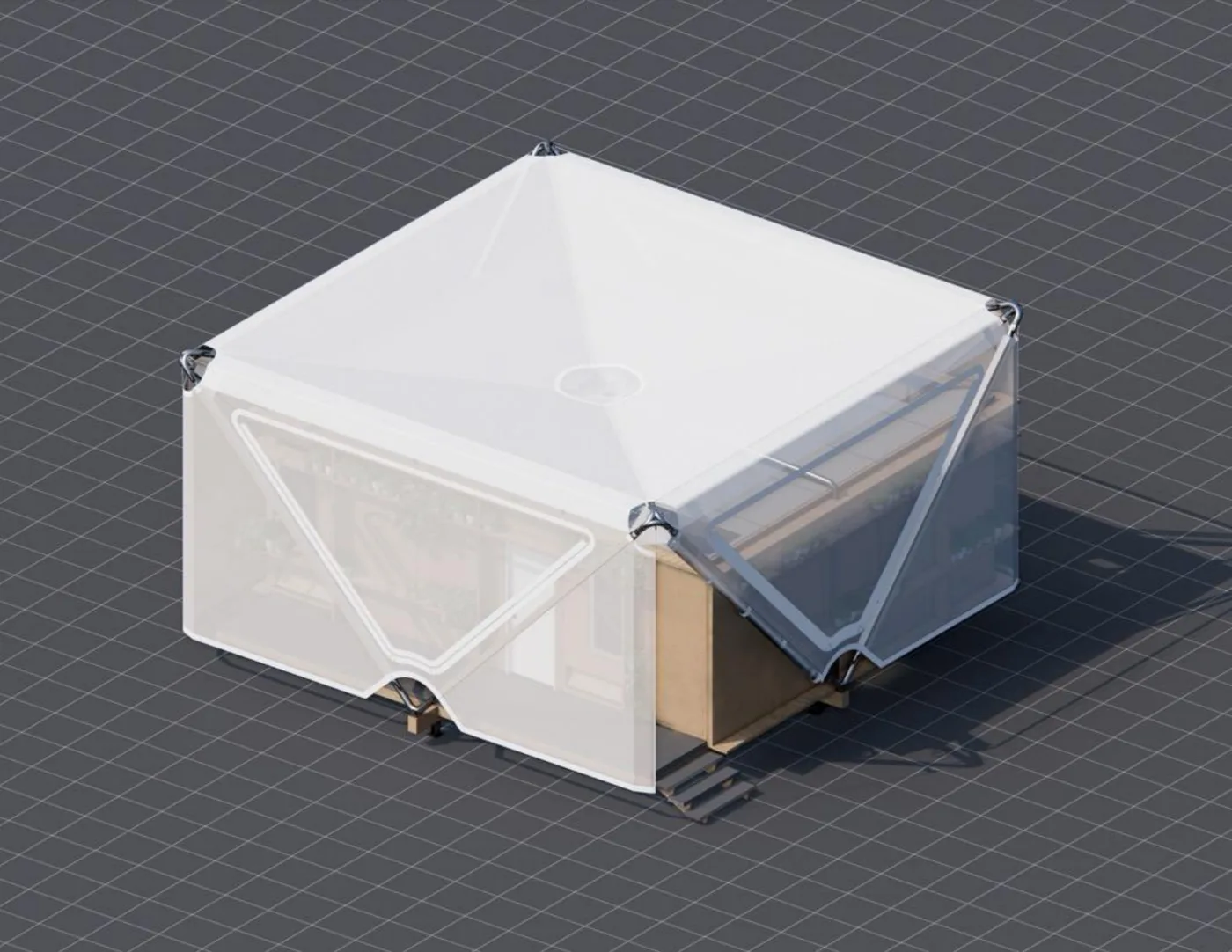
G&A Partners and CAL Collaborative.
Estia Homes is designed by G&A Partners and CAL Collaborative, led by architect Gabriel Calatrava. The research identified two primary design challenges, rapid, unskilled assembly and true all-climate performance, and answered both with a single double-skinned system.
The result is a shelter conceived not merely as a standalone object, but as part of a broader network within a displaced community, designed to link into clusters, blocks, and eventually the civic buildings a settlement needs to become a home.
Already built, not just drawn.
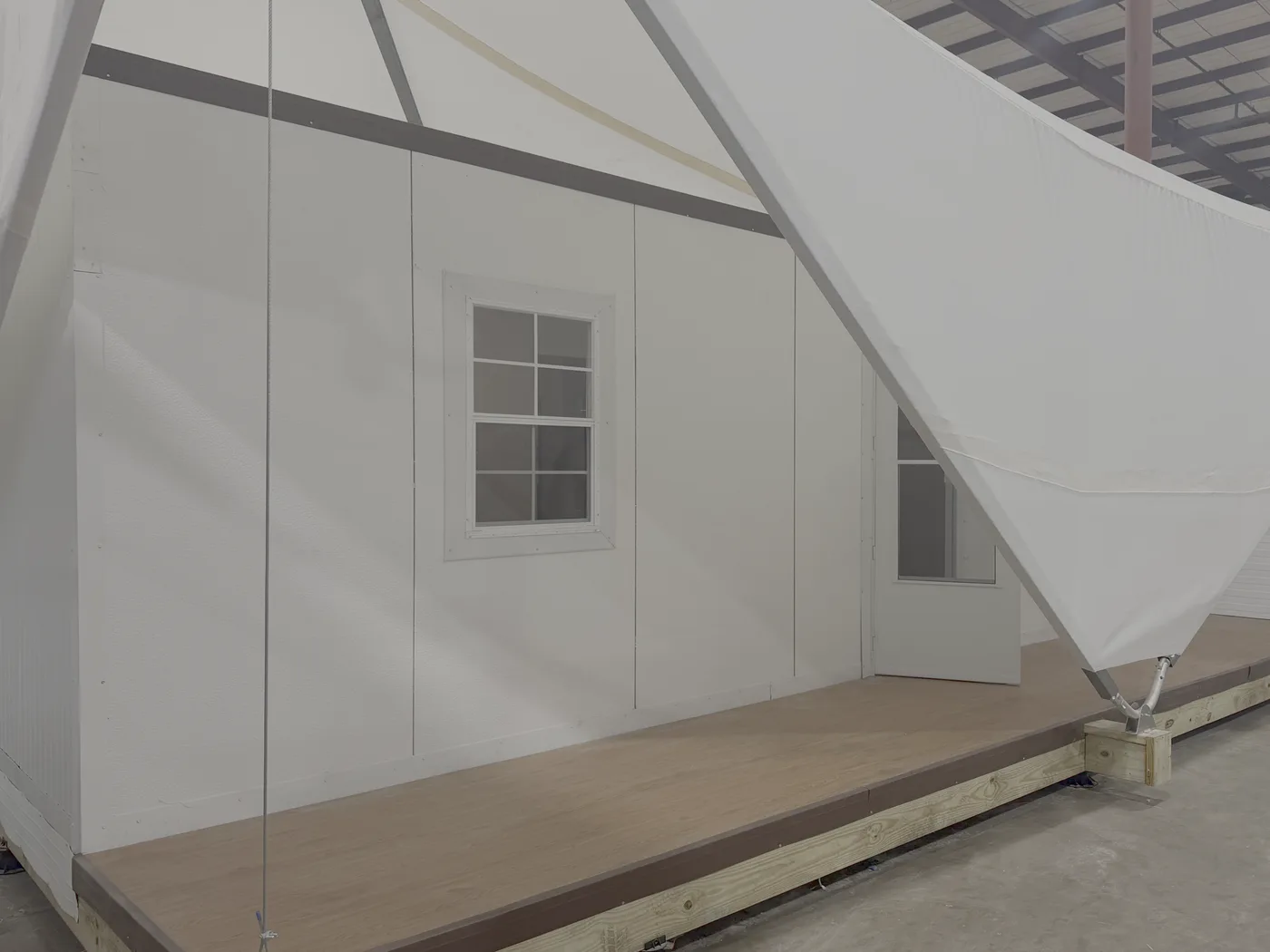
The design is past the page. A full prototype has been assembled, raised platform, folding frame, weatherproof shell, and finished interior, proving the system builds exactly as designed.
For governments and agencies weighing a response at scale, a working unit is worth more than any rendering.
Turn aid recipients into participants.
Estia Homes exists to change what displacement means for the people living through it, from waiting, to rebuilding.
We don't build boxes. We build homes, where displaced people find belonging, not as aid recipients, but as empowered participants in their own recovery.
What guides the work.
Dignity, never pity
Displaced people are not a problem to be stored. Estia Homes is designed to preserve privacy, family, and self-determination, the everyday conditions of a dignified life.
Community, not just shelter
Homes link into clusters and blocks so social structures survive relocation and local economies can take root, turning camps into cities that work.
Durability over disposability
A guaranteed ten-year lifespan replaces the endless cycle of degrading tents, better for families, and better stewardship of every relief dollar.
Response that reflects values
How a nation responds to displacement is a statement of who it is. Estia Homes gives governments and agencies a way to respond with vision, compassion, and real innovation.
The world is watching how we respond.
Estia Homes is ready to deploy dignified, durable communities, at the scale this moment demands. If your organization is responding to displacement, we'd like to talk.