
Warm in the snow. Cool in the sun.
The same double-skin architecture adapts to opposite extremes, because comfort is engineered into the structure.
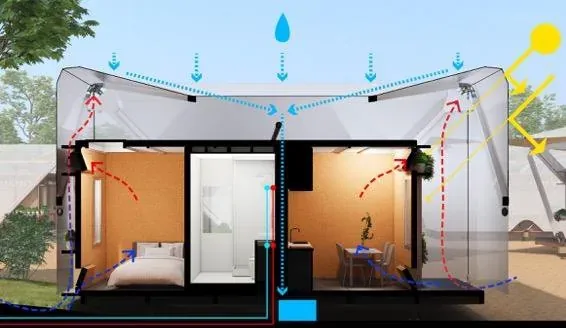
One cavity does the work of a furnace and an air conditioner.
A weatherproof outer canopy protects against rain and sun while creating a ventilated cavity between the outer envelope and the panelized interior. That cavity is the heart of the system.
In heat, it vents. In cold, it insulates. The home responds to its climate passively, reducing, and often removing, the need for mechanical heating and cooling.
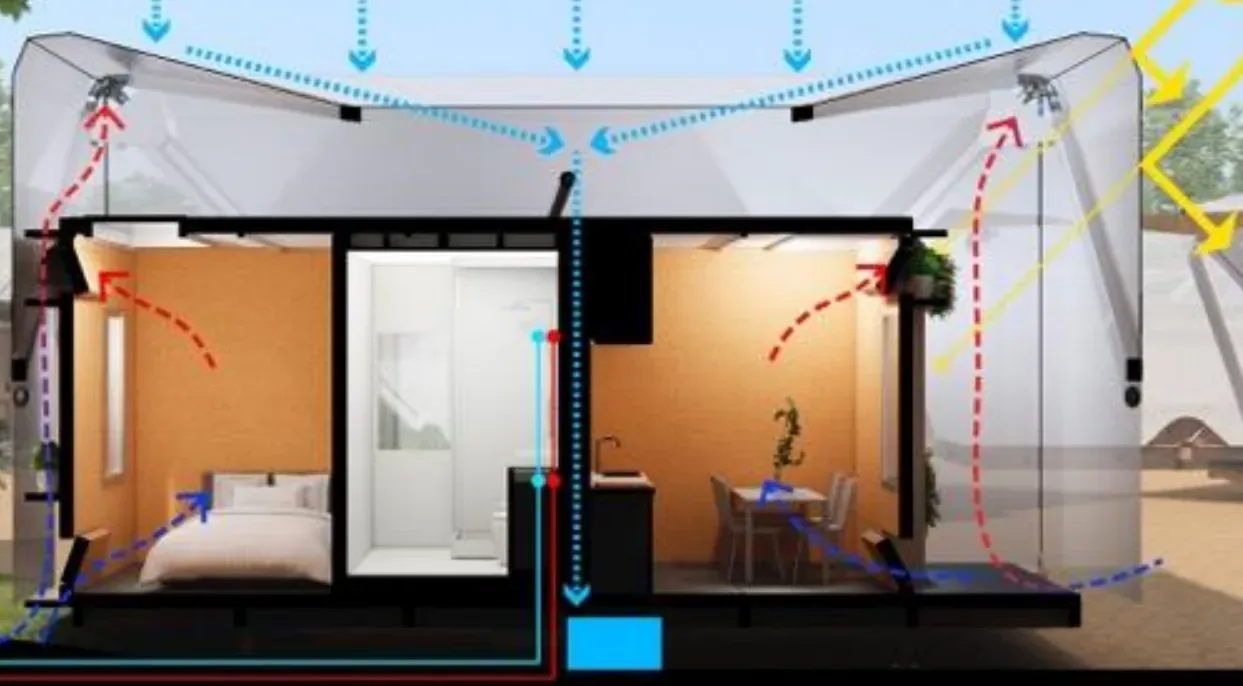
Cooler, without mechanical cooling.
In hot climates, the ventilated cavity and operable vents release trapped heat and hold the interior at a more comfortable temperature, no mechanical cooling required.
Passive cooling
- Ventilated double-skin cavity that carries heat up and out
- Operable vents tuned to the prevailing wind
- Shaded, comfortable interior that lowers heat-stroke and dehydration risk
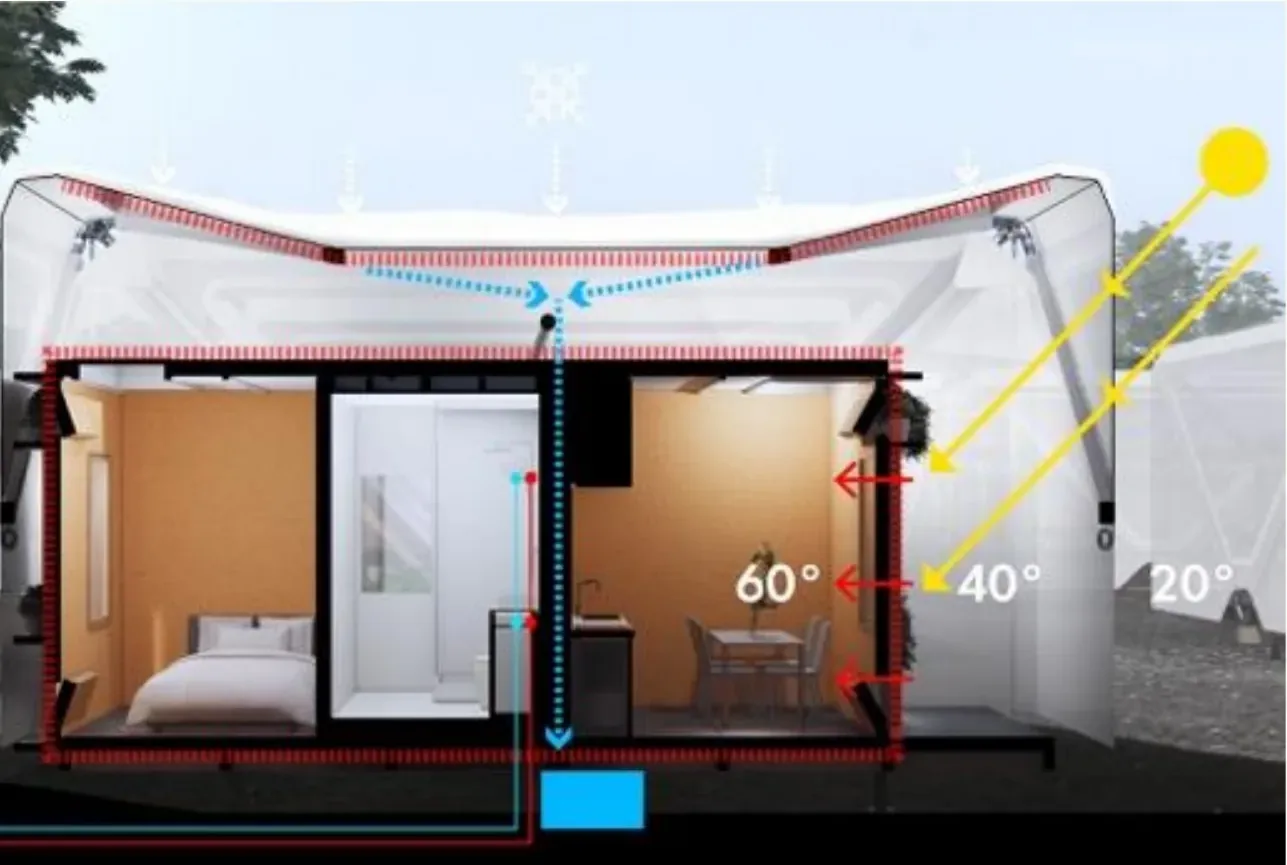
Warm and dry, through winter.
In cool and wet climates, a water-tight envelope and insulated panels cut heat loss and keep out rain, snow, and wind, the conditions that make standard tents fail.
Passive heating & protection
- Water-tight exterior envelope against rain and snow
- Insulated interior panels that reduce heat loss
- Heat-tracing that keeps water systems from freezing
- Trombe-wall thermal mass that stores daytime warmth and releases it overnight
- Rainwater retained through a center pipe to a water retention barrel
Comfort is not an upgrade. It is the difference
between surviving a place and living in it.
Built for every climate. Ready to deploy.
A home that heats and cools itself changes what a camp can become. See what all-climate, ten-year shelter means for the families and communities who live in it.